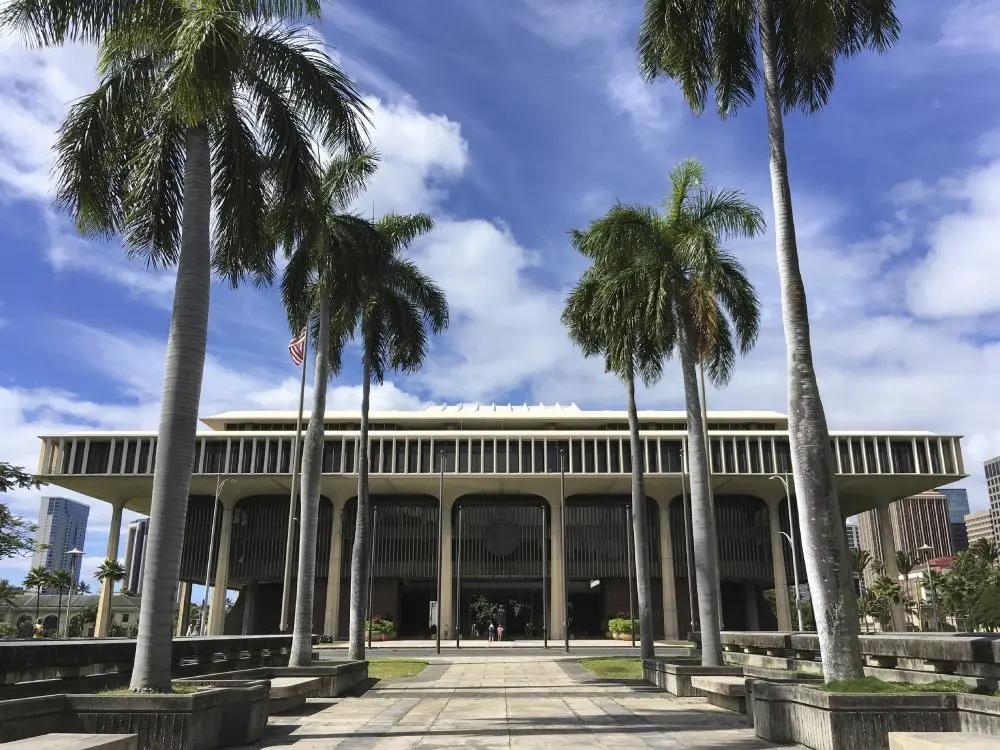
Gov. Josh Green has described the new green fee to fund environmental protection projects and cope with climate threats as “the biggest and perhaps most exciting change” happening in state government.
Environmental initiatives are crowd-pleasers, and the green fee windfall has definitely caused a stir at the State Capitol. But lawmakers are also asking some tough questions about the administration’s plans for that juicy new source of funding
The administration on Wednesday proposed $126 million in projects Green intends to finance with money from the new fee, ranging from $1 million to close out cesspools in Hōnaunau on the Big Island to nearly $20 million for beach restoration projects at Ala Moana, Waikīkī and in West Maui.
Those projects and dozens more still face some complicated hurdles.
The state House and Senate will now review the list in the months ahead and decide which will actually be funded. It then will fall to various state departments to plan and execute the green fee initiatives.
“There’s so many steps and it is a new process, so we need to remind ourselves that this is cracking the nut for the first time,” said Denise Antolini, president of the nonprofit environmental group Mālama Pūpūkea-Waimea.
The process may be slower than people are used to, she said, “but it’s inventing a whole new system, and that takes time.”
The source of all that extra cash is an increase in the state hotel room tax, from 9.25% to 10%, and a new levy on cruise ships. The governor last month described that extra revenue as “found monies in tough times.”
Green predicts the extra hotel room taxes and the new tax on cruise ships will raise about $126 million a year, but that could turn out to be a bit less depending on the final outcome of a legal challenge filed by the cruise ship industry.
If the cruise industry lawsuit over the new tax is successful, Deputy Finance Director Sabrina Nasir told senators last month the state may have to defer funding for some projects later in the process.
Green Projects Galore
The law that created the green fee last year requires the money be split into three equal parts that are environmental stewardship, climate and hazard resilience and sustainable tourism.
More than 600 proposals for green fee projects totaling more than $2 billion were submitted by the public and state departments last year, and the 10-member Green Fee Advisory Council appointed by Green spent months vetting those ideas.
The council then offered up a curated list in December for the governor’s consideration, with projects that would benefit communities across the state. The administration has been sorting through that list to ensure it fits with state requirements, according to Will Kane, senior advisor to the governor.
The projects that made the cut include $5 million to support community efforts to control the spread of invasive species, more than $10 million to finance community reforestation and habitat recovery initiatives and more than $3 million to fund mosquito control to protect native birds.
Other initiatives on the green fee list would help restore fishponds, update the state’s plans for conserving water and coping with drought, and take proactive steps to help prevent wildfires.
The governor’s list also includes nearly $3 million for for “Makai Watch” community groups to monitor coastal areas for marine resource enforcement, $5 million for retrofitting homes against hurricanes, $3 million to create a climate disaster resilience workforce and another $1.25 million to support “green job” creation.
Anxious Lawmakers
Lawmakers have been eager to see the administration’s plans for that money, with senators repeatedly asking at a Jan. 20 budget hearing when Green would announce what projects he wants to fund.
Senate Ways and Means Committee Chair Donovan Dela Cruz said it is important the project list be submitted to lawmakers promptly so they have ample opportunity to study it before negotiations begin between the House and Senate over green fee projects and the rest of the state budget.
That suggests there will be a lively behind-the-scenes scrum this session as the House and Senate negotiate the details of the state budget including how to divide up that money. Lawmakers have plenty of ideas about how the money should be used.
House Majority Leader Sean Quinlan joked at a Civil Beat event last month that “I could be really selfish and say I want to spend it all on the North Shore of Oʻahu,” which he represents.
On a more serious note, Quinlan said he believes the largest cost from climate change will be the cost of relocating coastal infrastructure. A major piece of that will be coastal roads, but “we’ve got power plants that are a couple hundred yards away from the ocean,” Quinlan said. “We’ve got airports that are pretty much at sea level.”
He also said a significant investment in hurricane shelters “would be nice, because I don’t want to blow away like Dorothy in the ‘Wizard of Oz.’ “
State Sen. Chris Lee, who represents Kailua, Waimānalo and Hawaiʻi Kai, said the state needs to invest in research and analysis to assess the real cost of addressing climate change “so that we can get a good handle on what we’re going to do.”
“If we do that right, I think ultimately we’re going to be able to see what we’re willing to fund, where that money should go, and then how to build accountable systems so to be able to track that as we invest,” Lee said.
Financing Issues
Senators were surprised to learn last month the administration plans to issue bonds to borrow $42 million for green fee construction projects for this fiscal year, and they were clearly skeptical of that plan.
That approach gives state departments more time to spend the funds, Nasir said, because money borrowed for construction projects can be carried over from one year to the next.
The administration also plans to borrow another $43.5 million and spend another $43.5 million in cash on green fee projects next year for a total of $87 million in the fiscal year that begins July 1, senators were told.
Dela Cruz questioned that borrowing plan, pointing out the borrowed money would not really come from the green fee. The state general fund will be used to repay the debt, and Dela Cruz called that “misleading.”
“The general fund is almost supplementing the green fee now,” because the general fund will repay the debt plus interest, he said. The law creating the green fee requires the governor to budget green fee projects with general funds, not with borrowed money, Dela Cruz said.
Nasir said the total cost of the green fee projects including interest payments will stay within the total green fee collections, but Dela Cruz called that a “shell game that is hard to track.”
Republican Sen. Kurt Fevella predicted taxpayers will be both confused and unhappy to hear some projects will be funded with borrowed money instead of with funds generated from the green fee itself.
“I’m going to tell you right now the community’s not going to buy into that,” Fevella said, noting that people have been told the green fee would pay for the projects when the bill was passed.
Story originally published by Honolulu Civil Beat and distributed through a partnership with The Associated Press.